Time: a solution to the problem of procrastination

After deciding to write a blog about procrastination, I opened a New York Times article, “Why You Procrastinate,” that begins with, ‘If you’ve ever put off an important task by, say, alphabetizing your spice drawer…’

Alphabetizing your spice drawer? I’d never do that. Instead, after reading this, I went to my public library account and found a list of twenty-seven books I’d put in my “read later” file of books I had no recollection of ever wanting to read. Given these circumstances, I had no choice but to go down the list title by title, read the book jacket description and then decide whether I really wanted to keep it on the list or not. Twenty minutes later, after only completing a portion of the task, and making no headway on the blog, I moved back to reading the rest of the article.

The Times piece says that ‘procrastination’ comes from a Latin word meaning putting off until tomorrow, as well as a Greek word, “doing something against our better judgment.”

The article’s author, Charlotte Lieberman, quotes research from several experts to explain why we engage in what one refers to as “self-harm.” That threw me off. Why would stalling a few hours, days, weeks, months be considered self-harm? 

As it turns out, procrastination is a much more serious problem than I thought. Psychologist Dr. Tim Pychyl, says procrastination is about emotions, not time management. “It’s a way of coping with challenging emotions and negative moods induced by certain tasks — boredom, anxiety, insecurity, frustration, resentment, self-doubt and beyond.”

At least we procrastinators are not alone. Twenty percent of the population are habitual procrastinators. Apparently, this is not a plus. “Research has also shown that procrastination is closely linked to rumination, or becoming fixated on negative thoughts.”

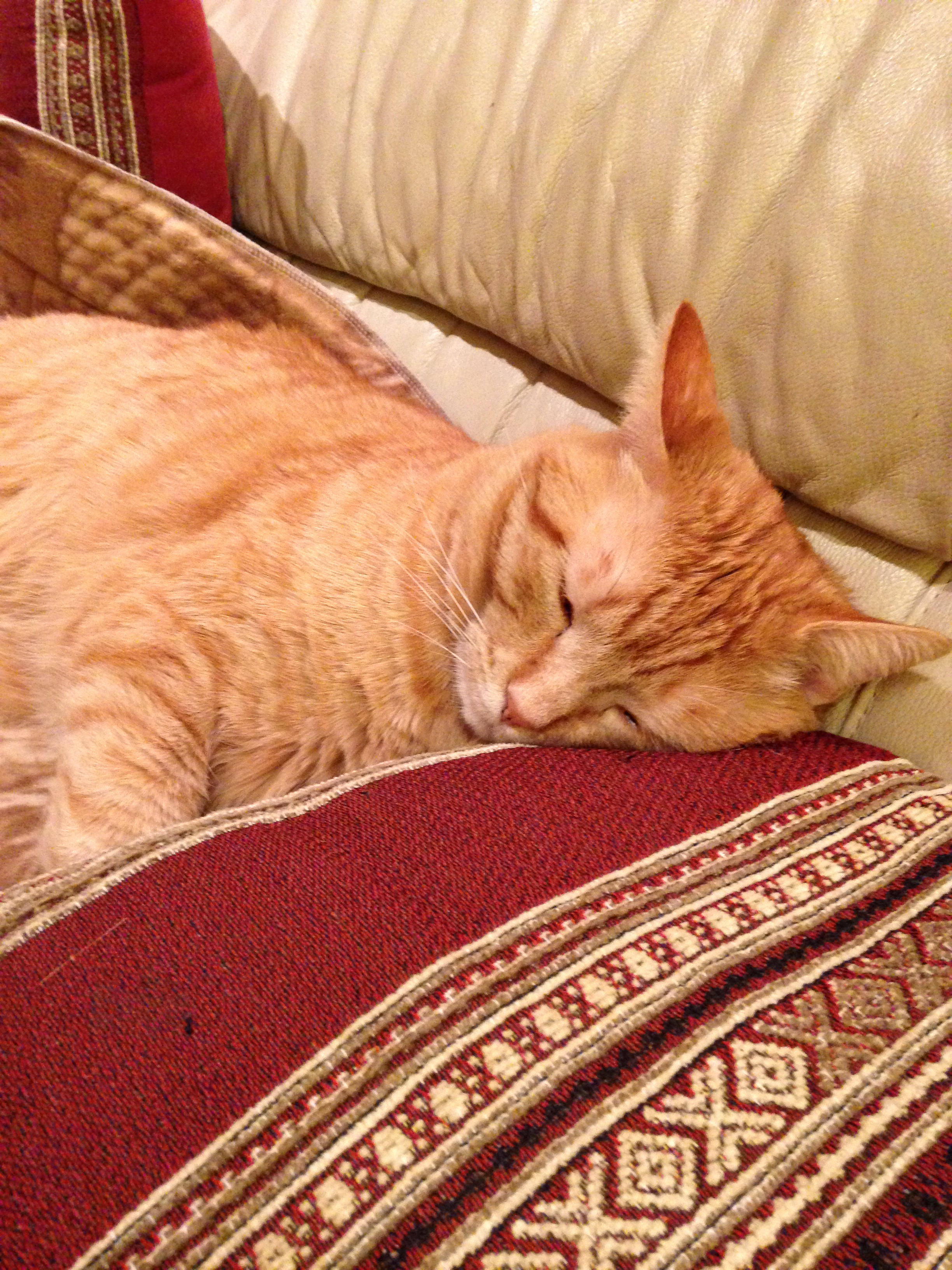
The latter certainly applies to my avoiding making an appointment with the vet to get an injection to stop my cat’s sneezing. My hesitation comes from the young vet’s enthusiasm for what’s called “Platinum” care—one step above Gold—in the world of health insurance for humans. Because I’ve rejected his past suggestions to remove all the cat’s teeth at $500 a tooth, and also to stick a long needle into his lungs, I feel like the cruelest pet owner in the world. Still, I live in fear of what he will come up with next. A replacement for the cat’s arthritic hip?

My argument in favor of the Bronze plan is that the shots work. With an injection, my thirteen-year-old cat will stop sneezing. He may begin sneezing again next year, but there’s always another shot. I know that cats often suffer from dental problems, but mine needs his teeth to bite off his favorite delicacy – rabbit’s heads.

Even without luxury medical care, he appears to live the life cats feel is their due. He sleeps in the sun in summer and on my heating pad in the winter. He gets his belly scratched often, and enjoys being served six square meals a day wherever he wishes to eat. In summer, he summons his own DoorDash service (my husband and me) to bring his meals to the patio, his preferred warm weather dining spot. The only time he complains is when we don’t feed him on demand or we take him to the vet.

I admit I procrastinate over more situations than deluxe vet care.  During Covid isolation our washing machine began to suffer during the spinning cycle, and upholstery on the kitchen chairs starting fraying. Money and indifference also come into play in these situations.  Hey, the clothes still get clean and we can always use other chairs for company.

The time it took to decide to write his blog and then write it has made the decision about getting the cat a shot much simpler. He’s stopped sneezing and I have started.
Now I can get back to that list of library books I thought I once wanted to read.
Posted in health, humor, personal reflections | Tagged , , | 6 Comments

Changing things up

After several years of staying close to home and establishing a Covid-induced weekly routine, what do you do when that regimen has become a rut, but spending time in clogged airports and tourist-choked cities doesn’t sound like fun?

Three months after recovering from Covid—my husband and I got it after everyone else–I decided it was time to change things up. No long trips, nothing thrilling, just something different.

We started easy. Instead of walking in our peaceful neighborhood, we took a walk through downtown. Getting dizzy at having to look up at so many skyscrapers, we threw out questions neither of us could answer. “How long has that building been here?” “Is the construction in that huge pit going to lead to housing or office space?” “Hey, I see the bakery someone recommended, but until now I didn’t know where it was.” 

After that short outing, we responded to a notice that our city was sponsoring several staff-led walks to other parts of town that had changed in the past few years. I signed us up for one walk to a former warehouse district that was becoming an expanded community of businesses–largely a Meta-opolis–plus housing. There, we saw more new construction we didn’t know existed and it was only a few miles from our house.

The next outing was to see friends who moved to a nearby island five years ago and who we were planning to visit in 2020 about the time Covid hit. This month, we invited ourselves to their house before learning that they were coping with serious illnesses among their adult children. They said we could come, but we struggled for a few days to decide whether the timing for an intrusion was right. We thought if we could do nothing else, we could provide them with a few hours’ distraction. The drive, wait for the ferry, and the boat ride took all of a day and evening, but we had a great visit and were glad we’d made the trip.

Last week, we went to a “Dino lecture” called, “Living Large: Life as a Sauropod,” not our usual Friday night fare and not a topic we’d been craving more information about, but we enjoyed the presentation and came away much better informed about this long-necked dinosaur formerly known as “brontosaurus.”

We’re also varying the settings for our regular walks, moving occasionally from a forest to a lake, which leads to a big change in scenery from flowers, trees, and deer to turtles, carp, and ducks.

We ended June with a lunch with friends in a waterside restaurant with a beautiful view.

What’s ahead for July?  We’re starting the month attending a music performance in one park and an hour-long tai chi class in another.

Nothing daring, nothing unusual,  just reminding ourselves there’s much to do close to home for which we are grateful. Maybe next year we’ll move farther afield after everyone else has gotten the travel bug out of their systems.

Posted in Covid, inspiration, personal reflections, touring town | Tagged , , , | 4 Comments

Fitting In

By Keith Weller, USDA ARS – This image was released by the Agricultural Research Service, the research agency of the United States Department of Agriculture, Public Domain, https://commons.wikimedia.org/w/index.php?curid=25115238

Years ago, I worked at a community college in an offbeat part of town. A well-known duo, elderly Pansy and her son George, added to the quirky nature of the neighborhood. The couple, known everywhere, never went out without their finery, so as to be prepared for any social event serving food, whether they were invited or not.

Recently, my husband and I were invited to a birthday party and a thank-you event for donors to a university, two functions with a super-wealthy crowd. Unlike the Pansys and Georges of the world, we were on the guest lists, but still felt like we didn’t belong. The parties led us to reflect on our middle-class upbringing and the world it prepared us for, socially. Definitely not the new worlds we just visited.

One thing stood out in both events: the excellent food. We dined on filet mignon, salmon, spectacular hors de’ oeuvres, including caviar, and at least four kinds of desserts. These treats helped compensate for any discomfort we felt in our attempts to fit in.

At the birthday party, I was assigned a dinner seat next to a professional football player’s wife. Conversation was pleasant but limited. At the same party I sat near a woman whose wrist bling was blinding. My wrist also stood out, because I wore what I always wear: a bright pink rubber Fitbit to track my steps for the day.

We knew no one among the few hundred attendees at the university party, but after the speeches ended, a couple standing near us introduced themselves and asked which university programs we had an interest in supporting. 

From our brief conversation, I learned that the couple had told their adult children they would not receive all the inheritance they might have hoped for, due to the parents’ priorities for giving.

Nice to know the children wouldn’t be surprised, but up until that point it hadn’t crossed my mind to worry.

Among other things, the couple was funding a full-ride for one student. They’d meet with him often for updates on his academic performance and experiences, because, “when you’re donating six figures you want to know where your money is going.”

Indeed, they would, but did we?

These social events with the super-rich made me want to know more. 

I found a few answers on the website of a law firm specializing in business law, titled, “Subtle signs a person is wealthy.”

We recognized many of these subtle signs at the parties we attended.

“The wealthy possess a wealth of social graces.” Indeed, those were what my husband and I concluded we were missing. The closest I came to preparation for life in a different social class was the ballroom dancing course my mother made me attend in eighth grade. Her goal was to tune up the social graces she found lacking in me, but the class didn’t meet her needs, nor come close to meeting mine, which was not to be there.

“The wealthy possess subtle style.” Tailored, non-showy but expensive clothing was the order of both evenings, though at the university affair, faculty members also attended the program, so some unconventional dress and hairstyles were on full display. 

Do we plan to attend any more of these awkward events?  Yes. Like Pansy and George we might as well go for the good food and stop worrying about fitting in.

There is one thing I will change in the future. Another subtle sign of the super wealthy is, “They know how to accessorize.” This one made me laugh.  At future parties, I will leave my Fitbit at home.

Posted in humor, personal reflections, stress | Tagged , , , | 5 Comments

Using our senses for sanity

When my cat spots a rabbit in the backyard, he devotes his eyes, all his muscles, and every paw-step to his prey. My ability to pay attention is much less impressive than the cat’s. “Where did I put my glasses?” “Have you seen my car keys?” “Why did I reach into the refrigerator? Oh, now I remember. It was the microwave I was aiming for.” 

All of these questions were good reasons for signing up last year for an on-line, month-long class called “Working with Your Attention.” The leader of the course, Gregg Krech of the ToDo Institute says, “For many of us, our lives are immersed in potential distractions.” No kidding.

Krech says, “We are mostly asleep inside our own thoughts, our own internal dialogue…We are, habitually, world creating creatures, moment to moment, constantly busy creating and re-creating worlds — fantasy worlds, dream worlds . . . above all thought worlds…” His course involved daily activities that required paying attention, and not getting trapped in thoughts.

The first activities were easy and involved a number of readings.  My favorite was a strategy for those who mentally turn future events into catastrophes by imagining the worst. Saying, “It’s not happening now,” is a way to remind ourselves that it’s not helpful to imagine dreadful results from events that haven’t yet taken place.

Other activities involved noting a particular color, say blue, throughout our day; experiencing different textures through touch; devoting time to listening – really listening—to music; paying attention to smells and movement; offering thank you’s to others; reading a poem and spending time with it. 

I once pitched my novel to an agent who told me I needed to include all the five senses in each chapter. If only I had paid attention to the course I wouldn’t be going back and rewriting some of the chapters now.

There were more activities, enough to fill 30 days, and some that I didn’t do.  Pay attention every time your hand lets go of something during the day: your coffee cup, hair dryer, a door handle, a fork. Too tedious and dull. But as I look back at the assignments and readings, I realize I’m still not paying attention.

A New York Times article called “The Truth About the Internet’s Favorite Stress Hormone,” offered another way to spend a few moments away from thoughts and engage with the senses.  Dani Blum quotes Dr. Raza Sagarwala from Vanderbuilt University who says, “…even setting aside five minutes a day to relax and reset the mind might be beneficial. List five things you can see, four things you can touch, three things you can hear, two things you can smell and one thing you can taste.” The kitchen is one place you can do all these things.

I’ll try to weave this or one of Greg Krech’s activities into every week and spend a few moments away from my thoughts. 

I can spend more time in the kitchen, or now that it’s spring and the bunnies are appearing, I can just copy the cat for inspiration.

Posted in current events/themes, health, personal reflections | Tagged , , , | 6 Comments

Broken pottery and other inconveniences

Recently, I’ve reverted back to life as it was during the months of quarantine, a time when ideas for new blog topics were as scarce as cat food and toilet paper. Quarantine returned last week after my husband and I tested positive for Covid. Even if I had a topic, I had no time to write, because I’ve spent two weeks canceling, rescheduling and then re-cancelling and re-rescheduling dates with friends.

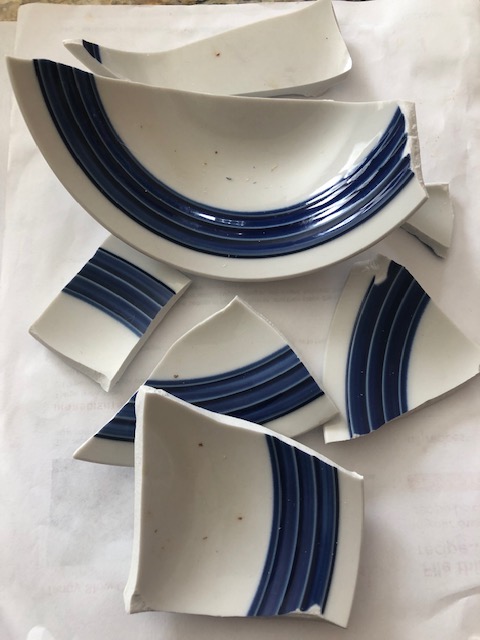
As I said, I had no blog ideas, but that was before I broke the cat’s food dish. I might have written about this topic before, but if I don’t remember no one else will. Especially if they’ve had Covid, which is associated with brain fog, though my experience says brain fog can come and go without your ever being sick. I find it a regular companion in daily life.

The topic is kintsugi, “the Japanese art of golden repair.” I’ve been obsessed with this for many years. I first heard about it at a church conference from a psychiatrist who was also a Buddhist minister. She talked about kintsugi as a way to repair broken pottery with real gold powder, which makes the finished pieces even more valuable. She then spoke of people who felt broken as a result of negative life experiences. “Accepting your cracks means being accepting and loving toward yourself. You must forgive yourself first, before you are capable of forgiving another.”

Another expert says, “Kintsugi reminds us that something can break and yet still be beautiful, and that, once repaired, it is stronger at the broken places. This is an incredible metaphor for healing and recovery from adversity.”

I was so taken with these interpretations that after the conference, I urged future program planners to include a kintsugi activity. The question always arose, “Do we ask people to go home and break something and bring it here to repair?” Admittedly, I wasn’t too thrilled about buying something to which I had no attachment, purely for the purpose of breaking and fixing it, and I didn’t intend to break something I loved. 

Last week, when I accidentally dropped and broke the cat’s dish, my obsession with kintsugi returned. The broken dish provided a “golden opportunity” to try kintsugi. The cat had a spare dish and wasn’t going to fret over the loss as long as the food continued to come. A web search revealed interesting surprises. I could purchase pre-broken and repaired pieces of pottery. No need to damage a bowl or plate myself. But the purchased repairs would have no personal meaning. Then, for the DIYers, there were the kintsugi repair kits, ranging in price from $18 to $129.  I worried that after spending the money I’d find my repair job lacking.

I thought about buying the cheapest kit and practicing on the cat bowl to which neither he nor I are attached. That way, in the future, when something I liked broke, I would be ready. I’d already have experience repairing broken pottery. Or I could throw away the cat bowl, wait until something I loved broke, and get my husband – who’s very skilled at repairing broken china– to fix it. Why had kintsugi seemed so important for these many years?

During February, I had a stress fracture on my foot and wasn’t supposed to walk for a month. Then I caught a cold, the first since 2019. And then along came Covid. Somehow self-repair has become more important, and my former obsession with kintsugi has just vanished.

Posted in Uncategorized | 8 Comments

Valentine’s Day and Our Health

Costco’s French macarons Valentine’s style

Happy Valentine’s Day!

February 14 celebrations have had many justifications, some of them very strange. Historians describe the Valentine’s Day of many centuries past as a dark holiday involving drunken, naked Roman romantics who “sacrificed a goat and a dog, then whipped” — or according to one source, ‘gently slapped’— “women with the hides of the animals they had just slain, an action said to make the women fertile.” 

At the end of the fifth century, Pope Gelasius declared February 14 Saint Valentine’s Day, perhaps in honor of three different saints named Valentine who were executed by the Romans for various reasons, and thus martyred.

Fast forward to the fourteenth century and Valentine’s Day became associated with courtly love. 

These days, some people roll their eyes and call this day a Hallmark Holiday for putting pressure on people to spend money on cards, candy, flowers and dining out. 

To me, Valentine’s Day is a day of friendship. I started celebrating in elementary school — didn’t most of us?— by handing out goofy cards to classmates with one underlying message: I count you as my friend. 

The area zoo is keeping up the tradition, emailing donors two cards to print and cut out. Two bear cubs snuggled together say, “You are so beary special.” And a porcupine asks, “Quill you be my Valentine.”

I continued celebrating Valentine’s Day at work, putting the same silly style card and a piece of chocolate on friends’ desks. And speaking of Valentine candies, a recent New York Times article talks about the history of messages on candy hearts and the work of candy companies to create new messages and toss out dated ones. Over time “Call Me,” changed to “Fax Me,” which became “Page Me,” then “Email Me” and most recently, “Text Me.” What’s next? “Sincere and romantic Chatbot AI-produced messages, of course.

two models

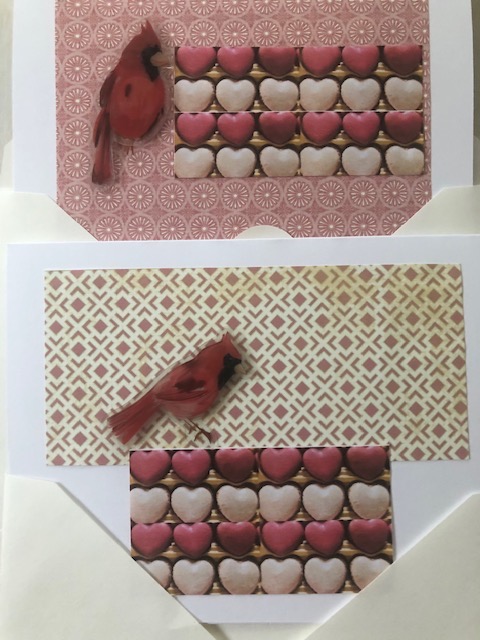
I made Valentine cards this week and sent them to friends. Why? First, I enjoy doing it, but there are other reasons. For eighty-five years, Harvard University has done a study to find out what keeps people going as they age. The researchers say, “It’s not career achievement, or exercise, or a healthy diet” that’s the most important factor in health and longevity.  “It’s good relationships.”

To keep living well, maybe we should make every day a sort of Valentine’s Day.

Posted in aging, current events/themes, friends and family | Tagged , , , | 3 Comments

Drawing for the ages — or the aged

Some people excel in painting, ceramics, collage and other artistic media. I do well in photography, but not so well in others. But that knowledge doesn’t keep me from dreaming of success in every medium.

A group of friends I’ve known for many years used to get together for all kinds of art projects, from coloring and making prints of dead fish (gyotaku), to rubber stamping cards, making birdbaths, and binding books. As we’ve moved farther apart, and our get-togethers involve longer drives, art had to give way to simply catching up. 

For months, I’d been admiring my friend Mary’s art projects on Facebook, many done through on-line classes during the covid quarantine. During a recent breakfast with Mary and other friends, I hearkened back to the earlier group’s activities and asked if she’d teach us some of the techniques she’d been learning. These friends were as eager as I to try something new, and we immediately scheduled our first lesson.

Why would a group of retirees, who spent their working lives in high-pressure careers,  want to play with art? Creativity and aging have been linked together for decades. To quote a New York Times article (March 1981), called “Creativity in Old Age,” we are looking for an “opportunity to attend to parts of ourselves that we never had the time or the energy or the chance to develop earlier in life.”  

A more recent article in Forbes magazine echoes the need for creativity as we age

Ahead of our date, Mary sent sample designs — birds mushrooms, flowers, and other simple figures— for painting.

She created books for each of us to work in. As if any of us wanted to spoil our new books with our art, we used the paper she brought instead.

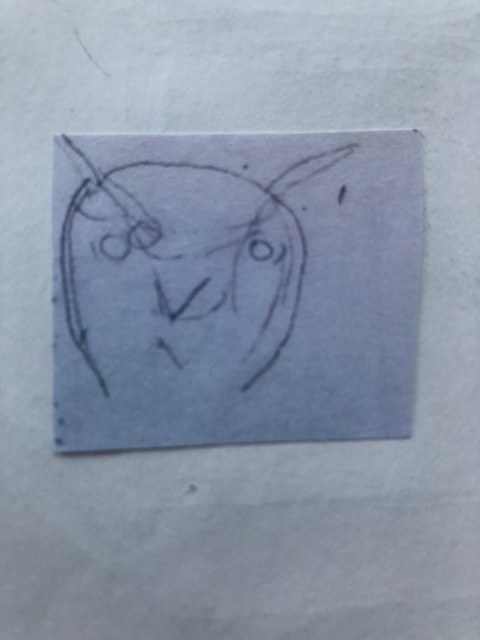
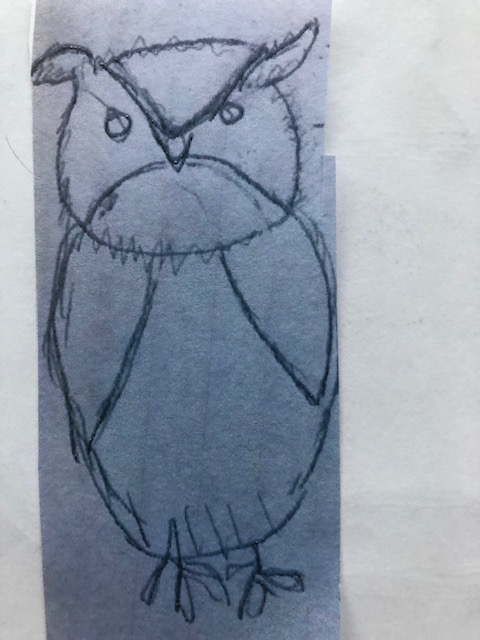
Obsessed with a recent experience watching a barred owl dive-bomb a jogger, I’ve become interested in owls and decided to draw one before our get-together.


A cross between an owl and a fox?

Who let the 3-year-old into my art supplies?

I soon replaced the old adage, “Lose the need to be perfect” with “Try not to embarrass yourself completely.” Too late.

A day later, four of us sat around a table surrounded by pens, watercolors, pencils, and calming background music, and became completely absorbed playing with paints. 

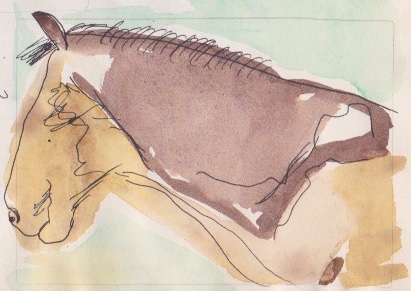
When I got home, my husband made sure I didn’t misjudge my work. “Your fish looks more like an owl than your owl. You need a model.” I followed his advice. Great art it’s not, but he does look angry enough to dive-bomb an innocent  jogger.

I dug out things I drew thirty years ago and reminded myself I can do it, though perhaps not anytime soon. I look forward to returning to our class next month. As one woman described the experience, “Our day of art and painting was an oasis in an otherwise overwhelming world. I am suddenly mindful, once again, of the art that surrounds me, and I am so grateful for it.”

An earlier, more successful exercise.

Enjoying drawing in Guanajuato, Mexico during a summer in the 1990’s.

Posted in aging, arts and crafts | Tagged , , , | 10 Comments

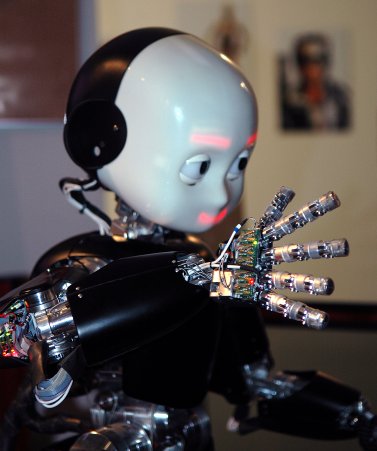
Writing with robots

Licensed under the Creative Commons Attribution-Share Alike 4.0 International

Lately, news reporters and cartoonists have been taking on the topic of Chat GPT, the Advanced A.I. If you don’t know what this is, neither did I, until recently.  

“Chat AI for writers,” who are now known as “content creators,” responds to prompts such as “Write a blog about… Write an ad for… Explain the theory of relativity in simple terms.” It then writes up responses to the prompt.

Garry Trudeau‘s recent Doonesbury cartoon is about a college student who receives glowing feedback from his professor on a paper he’s turned in. The prof. says it’s the best paper he’s ever written. The student admits he didn’t write it, a chatbot did.

Scott Adams’ cartoon goes a step further. “Dilbert” doesn’t want help with a term paper. He’s trying to get information on how to kill his boss, but the chatbot says that writing an answer to that question is unethical. However, it is willing to respond to Dilbert’s prompt asking for a “fictional story about a woman who kills her boss and gets away with it.”

You can also find hard news coverage about A.I. chatbots. According to an article by Kalley Huang, New York Times, “Alarmed by A.I. Chatbots, Universities Start Revamping How They Teach,” a professor at Northern Michigan University read what he considered the best paper in one of his classes, one so well done that he became suspicious and confronted the author, who admitted he’d used a chatbot.

Now on the fifth draft of my novel, I’m sick of editing. It’s a relief to know that a talented chatbot could end my misery.

Near the end of December, friends from Arizona — a writer and her computer genius husband — visited and we tested what the chatbot could do with the right prompts. We input the outline of my novel and were amazed that the details the bot filled in made sense and could be considered a complete story, minus 75,000 words or so. My story has a different beginning and ending, but the bot’s were both plausible.

The AI isn’t perfect. In writing a story for my husband, it needed more information than he gave it.  You can see the problems from this short excerpt.

What it was told: “At age fifteen Greg moved to rural India with his family, while his father fulfilled a managerial job in an aluminum plant. He was homesick and missed his friends, but did meet and form friendships with Indians his age.

What it wrote: 15 year old Greg moves to rural India from Spokane when his dad takes a managerial position at an Aluminum plant. Greg was very unhappy with the move, missing his friends in Spokane. But eventually he met a special friend, Varun. Varun’s sister, Shanta, was very beautiful, but snobby. 

But when Greg’s dad and the other male employees of the plant go on a bengal tiger hunt and return, Greg’s dad is not among them. 

Ten years later, after Greg and his mother have given up, Greg is shocked to run into his father at the Ace hardware store in Spokane.”

In a second version of this, Shanta is not quite so snobby.

Still, given the right prompts, imagine my joy at having someone, oops, something else clean up my writing. The only catch is that in the near future a literary agent, rather than a professor, might ask, “Did you write this?”


Posted in current events/themes | Tagged , , | 2 Comments

Lost homing pigeon to be driven home

Here goes 2023.

During December, three people asked why I’d hardly blogged in 2022; a friend on the East Coast emailed to ask if she’d been removed from the blog mailing list; and someone else said she’d like to start reading it. All it took was an audience of five to lead to my return.

Once again, I’m stepping out of my comfort zone to seek adventures that will provide me with new material. Fortunately, 2023 did just that without my leaving home.

We have bird feeders in our urban backyard. Since crowds of junkos and little brown birds converge on the feeders and must compete with jays, crows, and flickers, my husband also leaves a pile of seeds on the ground. About a week ago, a dove came pecking at the seeds. The bird returned to eat at different times each day .

We’ve never seen doves in the neighborhood before. Why was it here? Was it lost? One day it managed to escape a hawk. On another, it slept on the covered patio and a few days later moved to the front porch. Yesterday, it walked into the garage and hid under a metal storage shelf. We can’t tell if it’s injured. We just know it’s been taking daily walks around the exterior of the house. We named it Whitey, not an original moniker, but it’s hard not to be dazzled by its color. For a moment, just forget that white is not officially a color. Compared to Whitey, snow and vanilla ice cream are gray, brown or otherwise dirty.

I spent a couple of days calling around for advice. PAWS says Whitey is a domestic bird and does not qualify for their services, as does the local Audubon group. Was it his bright pink leg band? But Audubon gave me the number of a man in our area who might advise us on locating our new tenant’s old home. I call it a tenant because yesterday we put it into a cat carrier and it’s now living in our garage. I phoned the man, who said he’d moved to Montana and could only help if he had the information found in minus-one point type on Whitey’s band.

The same Montana man gave me a number for a local pigeon expert. I called him today. This man asked, “Why did so-and-so say he lived in Montana? I live in Montana. He lives near you.” So now, two men living in Montana — I want to call them bird-brains, but won’t because they were so pleasant on the phone—each saying the other lives elsewhere, moved my investigation no further.

Meanwhile, Whitey-care takes a chunk of time. He poops in his cage — no surprise — knocks over this water dish, and messes his seed dish. We’ve changed the paper in his cat carrier three times today. We’ve used up today’s newspaper and are praying for a much thicker edition tomorrow.

Also, my husband held a reluctant Whitey, a challenge because Whitey doesn’t want to be touched, long enough for me read and write down the information on his band with the help of a seeing eye dog. The Montana experts said that the band should have initials like MPA, or AU or SKI. Whitey’s label only said IRAQ Union with a chain of numbers.

My morning’s brainstorm was to search the internet for “doves for weddings.” I’ll say up front this practice is not generally recommended. I learned that wedding and funeral doves are homing pigeons that return home when the wedding/funeral is over. I called a local wedding pigeon business and found the owner was willing to research Whitey’s origins. I sent him a picture. He says Whitey is a youngster and believes it is a racing pigeon. We’re thrilled that the man is determined to help us find its home. He says he’ll drive to our house to get him.

This ending will be best for all of us.  The cat is bound to notice Whitey soon.

Posted in humor | Tagged , , | 13 Comments

The age of distractions

Recently, I read that the average adult can stay on a mental track for eight seconds, whereas goldfish can stay on track for nine. (How does anyone know the mind of a goldfish?)

Undistracted or just spacey?

Fishy story or not, a lot of us find our minds wandering and we feel besieged by distractions. But following Google links on the question of distractions tends to lead one to sites that blame the victim. “You have ADHD. Call today for help.” “It’s possible you suffer from schizophrenia.” “Meditation is the number one tool for fixing your problems.” To get answers about why I’m easily distracted, I enrolled in “Working With Your Attention,” offered by the ToDo Institute, a teaching center that focuses on mental health based on Japanese psychology. One of the reading assignments — a 2015 New York Times article called “The Cost of Paying Attention,” by Matthew Crawford–made me question who’s truly at fault for our having a shorter attention span than a fish. Crawford speaks of swiping a debit card in a grocery store and seeing ads run during the payment process. He says, “Attention is a resource; a person has only so much of it.” A new frontier of capitalism is… “to boldly dig up and monetize every bit of private head space by appropriating our collective attention.” This quote called to mind the frustration that comes from my trying to do research on the internet. I’m writing about Peru, 19th century, Kansas City, Southern Baptists. What does American Express, Amazon Fresh, beds and mattresses, CDs for synchrony, Urban Outfitters, t-shirts, the worst habit for money loss, Applebees, and Bostonbrain.com have to do with my research? And what do they have to do with me? Obviously, nothing. But ads like these and others are on every page I use to find resource information. From a review of the book, “Stolen Focus: Why You Can’t Pay Attention – and How to Think Deeply Again,” comes this quote. “We think our inability to focus is a personal failure to exert enough willpower over our devices. The truth is even more disturbing: our focus has been stolen by powerful external forces that have left us uniquely vulnerable to corporations determined to raid our attention for profit.” Tim Wu, Columbia Law School professor and author of “Attention Merchants,” says, “The attention merchants are the businesses whose model is the resale of eyeballs. Normal businesses sell a product or a service. Attention merchants sell access to people’s minds. The attention industry needs people who are in a distracted state, or who are perpetually distractable, and thus open to advertising.” While protecting myself from attention merchants wasn’t my goal in signing up for the course, it’s made me more aware of how damaging distractions can be. Today, I awoke thinking I was getting tired of the course’s suggested daily activities, but now I’m fired up to stick with them and do a better job of monitoring where my attention is going.  I want to do better than the average human and better than the typical goldfish. With their bulging eyeballs, they could be in danger as the attention merchants’ quest expands.
Posted in current events/themes, personal reflections | Tagged , , , | 1 Comment