
“While in my heart there swells a song,
And I can sing.”
James Weldon Johnson
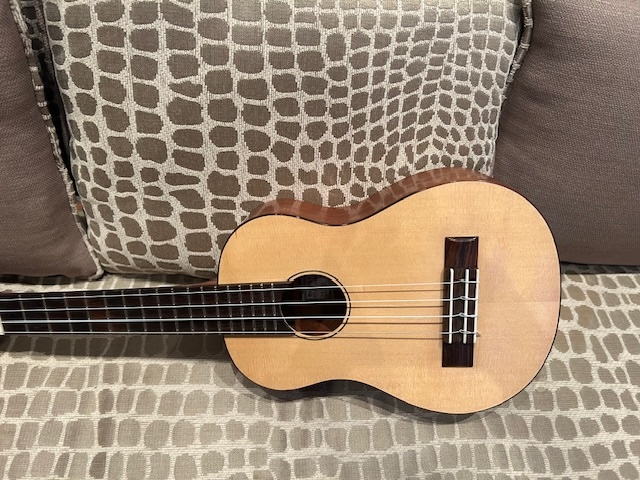
At last Sunday’s church service, our new ukulele group had its debut performance, which consisted of accompanying the audience’s singing of a gatha (Sanskrit for song or verse). As the sentence above should make it clear, we weren’t playing a solo and the audience was probably too busy singing to know if we made mistakes, yet for the players it was a satisfying experience. “We did it,” was our common reaction, partly said from relief that it was over, but also reported with smiles on our faces. That’s because making music with others has significant benefits.
Greater Good Magazine, subtitled, “science-based insights for a meaningful life,” offers this headline in its June 28, 2016, issue: “According to new research, music helps synchronize our bodies and our brains.”
And who doesn’t want days, or even weeks and months, when their bodies and brains work together?
“Researchers recently discovered that we have a dedicated part of our brain for processing music, supporting the theory that it has a special, important function in our lives.” (Greater Good)
“If it is a language, music is a language of feeling,” says the National Library of Medicine website. Playing music and singing are common experiences in many lives, from hearing our mothers singing to us as babies to being introduced to an instrument early in life. Many of my generation took piano or violin lessons in elementary school and many more have followed ever since.
Having been a member of an earlier ukulele group, I found playing music was a way to get to know people I’d never talked to before. And since at least one band member was a native Japanese speaker, playing music together offered a way to communicate. Playing in the newer ukulele band offers the same opportunity to get to know new people while learning new songs.
The American Psychiatric Association website agrees that music can bring people from different cultures and life experiences together. “Music can also serve as a catalyst for social connection and support, breaking down barriers and bridging divides.”
Given our aging population, it’s also encouraging to learn that “music training for the elderly can be seen as a tool to delay cognitive declines.” I remember a friend saying his aging mother had stopped talking, but he was delighted that she could still sing.
I studied piano in elementary school and quit in seventh grade. My husband and I took lessons for many years as adults, but eventually lost our teacher. Our piano bench currently serves as a place to set things before taking them upstairs and the piano itself is an avid collector of dust. However, after reading about all the benefits of playing music, I’m convinced it’s time to get it tuned.


 Still Life
Let me know if you want a sympathetic piano teacher….
Vera
Get Outlook for iOShttps://aka.ms/o0ukef
Hi Vera, Are you a piano teacher?