
After deciding to write a blog about procrastination, I opened a New York Times article, “Why You Procrastinate,” that begins with, ‘If you’ve ever put off an important task by, say, alphabetizing your spice drawer…’
Alphabetizing your spice drawer? I’d never do that. Instead, after reading this, I went to my public library account and found a list of twenty-seven books I’d put in my “read later” file of books I had no recollection of ever wanting to read. Given these circumstances, I had no choice but to go down the list title by title, read the book jacket description and then decide whether I really wanted to keep it on the list or not. Twenty minutes later, after only completing a portion of the task, and making no headway on the blog, I moved back to reading the rest of the article.
The Times piece says that ‘procrastination’ comes from a Latin word meaning putting off until tomorrow, as well as a Greek word, “doing something against our better judgment.”
The article’s author, Charlotte Lieberman, quotes research from several experts to explain why we engage in what one refers to as “self-harm.” That threw me off. Why would stalling a few hours, days, weeks, months be considered self-harm?
As it turns out, procrastination is a much more serious problem than I thought. Psychologist Dr. Tim Pychyl, says procrastination is about emotions, not time management. “It’s a way of coping with challenging emotions and negative moods induced by certain tasks — boredom, anxiety, insecurity, frustration, resentment, self-doubt and beyond.”
At least we procrastinators are not alone. Twenty percent of the population are habitual procrastinators. Apparently, this is not a plus. “Research has also shown that procrastination is closely linked to rumination, or becoming fixated on negative thoughts.”
The latter certainly applies to my avoiding making an appointment with the vet to get an injection to stop my cat’s sneezing. My hesitation comes from the young vet’s enthusiasm for what’s called “Platinum” care—one step above Gold—in the world of health insurance for humans. Because I’ve rejected his past suggestions to remove all the cat’s teeth at $500 a tooth, and also to stick a long needle into his lungs, I feel like the cruelest pet owner in the world. Still, I live in fear of what he will come up with next. A replacement for the cat’s arthritic hip?
My argument in favor of the Bronze plan is that the shots work. With an injection, my thirteen-year-old cat will stop sneezing. He may begin sneezing again next year, but there’s always another shot. I know that cats often suffer from dental problems, but mine needs his teeth to bite off his favorite delicacy – rabbit’s heads.
Even without luxury medical care, he appears to live the life cats feel is their due. He sleeps in the sun in summer and on my heating pad in the winter. He gets his belly scratched often, and enjoys being served six square meals a day wherever he wishes to eat. In summer, he summons his own DoorDash service (my husband and me) to bring his meals to the patio, his preferred warm weather dining spot. The only time he complains is when we don’t feed him on demand or we take him to the vet.
I admit I procrastinate over more situations than deluxe vet care. During Covid isolation our washing machine began to suffer during the spinning cycle, and upholstery on the kitchen chairs starting fraying. Money and indifference also come into play in these situations. Hey, the clothes still get clean and we can always use other chairs for company.
The time it took to decide to write his blog and then write it has made the decision about getting the cat a shot much simpler. He’s stopped sneezing and 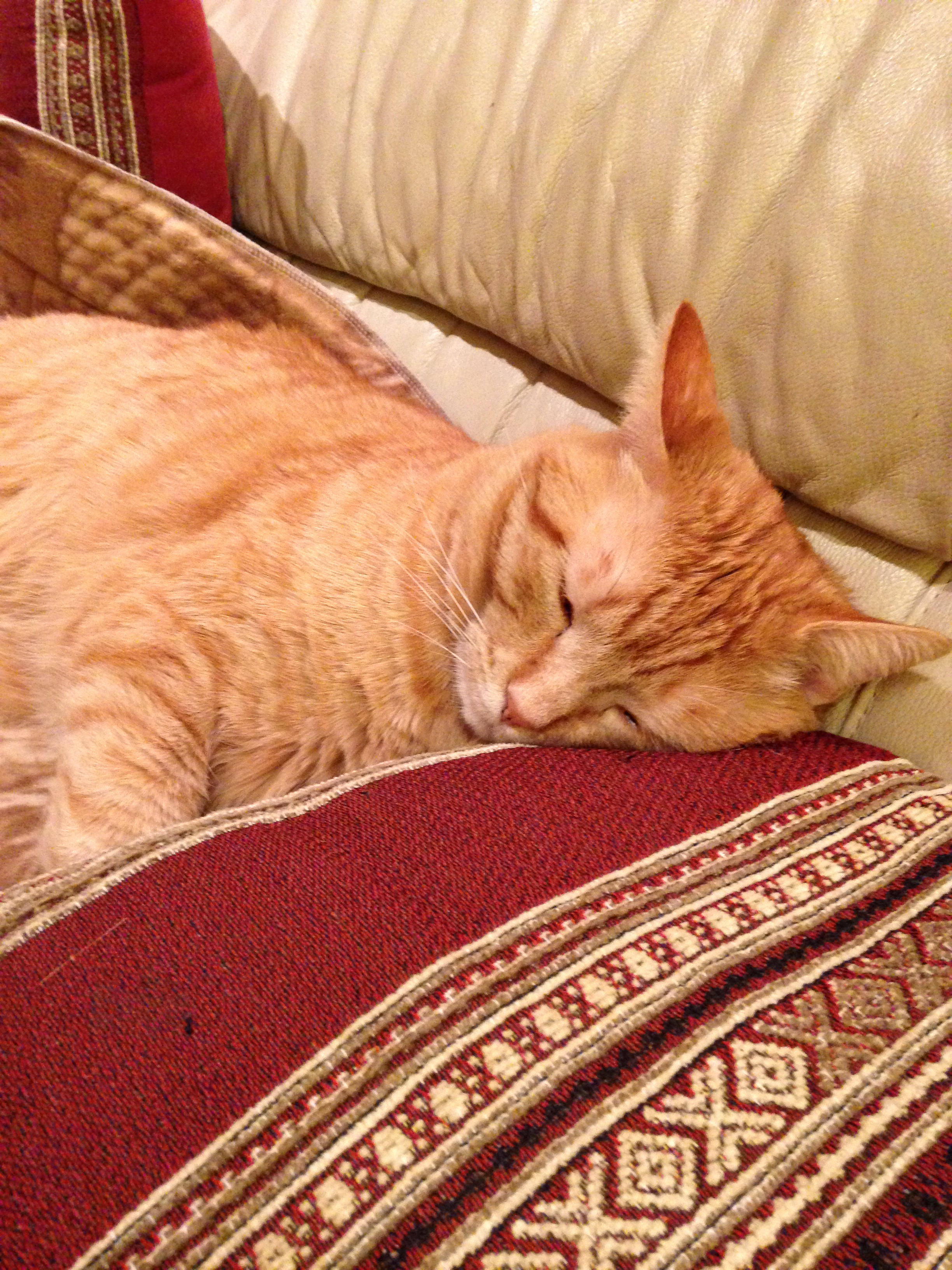 I have started.
Now I can get back to that list of library books I thought I once wanted to read.


 Still Life
I really enjoyed this post, Ann!
Thanks, Marilyn. Good to hear from you. It’s been awhile since we met for Italian.
thanks, Marilyn. It’s been awhile.
I LOVE this one. And the fact that you are hanging in for Bronze, rather than Platinum, care. One vet we almost fired me on the spot when I said that we would not be engaging in extraordinary measures for which ever human companion it was.
I hadn’t seen the article in the NYT. Much nicer to read your summary – and kinder to this old procrastinator.
>
Thanks, Nancy.
LOL! Good to hear you dealt with the important matter of reviewing your to-read list.
Removing all the cat’s teeth – yikes!